The Connectors: Meet the Iowans Stitching Small Towns and Big Cities Back Together
The Gap Nobody Wants to Talk About
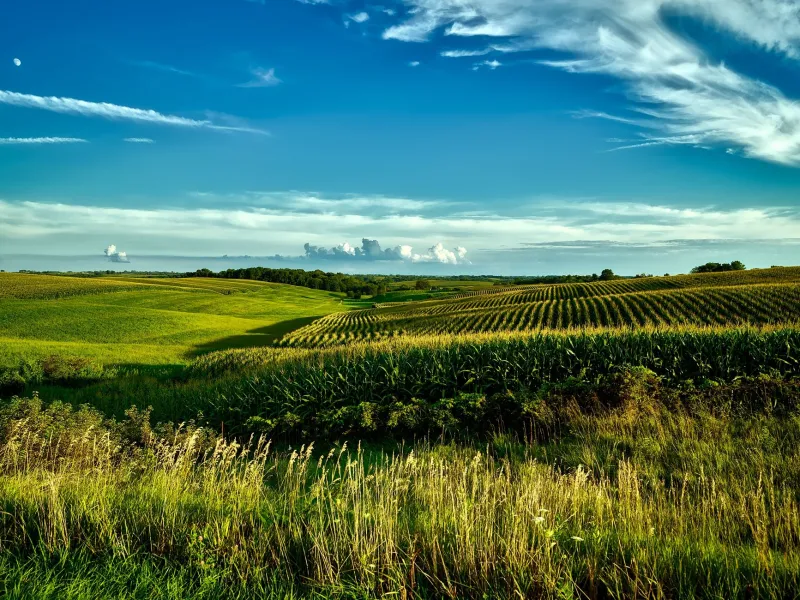
Drive from Des Moines to, say, Clarion or Creston, and somewhere along the way the conversation changes. The concerns shift. The references shift. Even the pace of life shifts. Iowa has always had this tension between its cities and its countryside, but lately it feels less like a healthy difference of perspective and more like two separate states sharing a border.
Politicians love to exploit that gap. Talking heads on cable news love it even more. But there's a whole category of Iowans who find it mostly annoying — and who've decided to do something about it.
They don't have a formal name. They're not a lobbying group or a nonprofit with a snappy acronym. They're business owners, school administrators, extension agents, and chamber directors who've figured out that the problems their communities face — workforce shortages, crumbling infrastructure, disappearing services — don't actually stop at the city limits sign. And neither do the solutions.
Call them connectors. And Iowa has more of them than you might think.
A Feed Store Owner Who Became an Unlikely Tech Broker
Take Randy Helgeson, who runs a farm supply business outside of Marshalltown. A few years back, Randy started noticing something: the ag-tech startups popping up in Ames and Des Moines were building products for farmers, but they weren't talking to many actual farmers. Meanwhile, his customers were dealing with real, specific problems — soil moisture monitoring, equipment diagnostics, supply chain delays — that some of those same startups were supposedly solving.
So Randy did what seemed obvious to him: he started making introductions.
"I'd go to an ag conference in Des Moines, meet somebody building a precision farming app, and I'd think, 'My neighbor Dale would either love this or tell you exactly why it won't work in a real field,'" Randy said. "Either way, that conversation needed to happen."
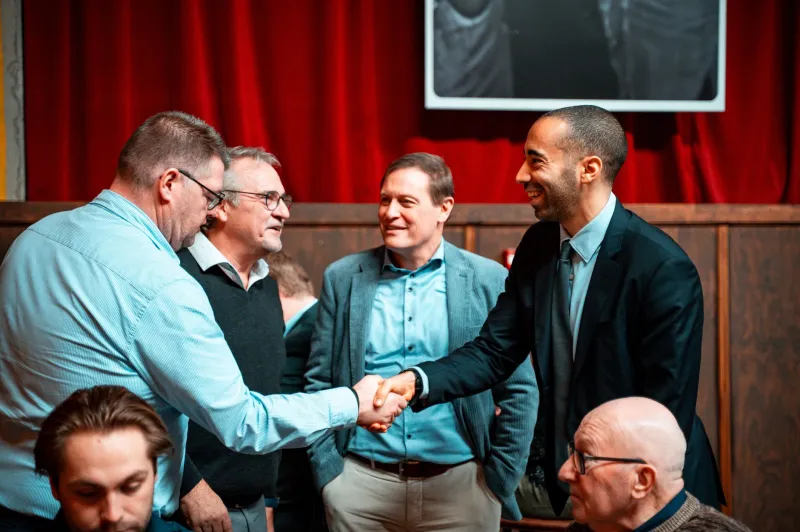
He started hosting informal dinners at his store — part product demo, part focus group, part potluck. Farmers would show up, startup founders would drive out from the city, and for a few hours they'd actually talk to each other. No pitch deck required.
The results have been surprisingly concrete. At least two products were significantly redesigned based on feedback from those gatherings. One Ames-based company ended up hiring two people from the Marshalltown area after realizing they needed folks who actually understood the operational realities of a working farm. Randy doesn't take credit for any of it. He just made the call.
A School Principal Who Refused to Accept That Small Towns Can't Have Nice Things
In northeast Iowa, Denise Kramer spent years watching her rural school district struggle with things that larger districts in Cedar Rapids and Iowa City seemed to handle without blinking — specialized instruction for students with learning differences, advanced coursework, mental health support. The resources just weren't there.
But Denise had a hunch that some of those bigger districts weren't swimming in resources either. They were just slightly less underwater.
She started reaching out. Awkwardly at first — cold emails, a few phone calls that didn't get returned. But eventually she connected with a curriculum coordinator in Cedar Rapids who was dealing with her own staffing headaches and was curious about whether a rural-urban partnership might let both districts do more with less.
What followed was a collaboration that now allows students in Denise's district to access specialized coursework through a shared virtual instruction model, while the Cedar Rapids district gets access to a pool of licensed educators in Denise's network for hard-to-fill substitute and part-time positions. It's not a perfect system. There are scheduling headaches and occasional technology failures. But kids in both places are getting something they weren't getting before.
"People assume rural districts are just waiting around for the cities to rescue them," Denise said. "That's not it at all. We have things to offer too. You just have to be willing to pick up the phone."
A Chamber Director Who Turned a Rivalry Into a Referral Network
For a long time, the chambers of commerce in Iowa's smaller cities and the metro chambers basically ignored each other, or quietly competed for the same state economic development dollars. Marcus Webb, who runs the chamber in a mid-sized Iowa town he describes as "big enough to have a stoplight, small enough that everyone knows who ran it," thought that was a waste of everyone's time.
He started attending Iowa Association of Business and Industry events not just to network within his own lane, but to deliberately seek out counterparts in larger markets. His pitch was simple: if a company is looking at Iowa but isn't sure it fits in Des Moines or Cedar Rapids, maybe it fits in his town. And if a company outgrows his town, maybe it moves to Des Moines instead of leaving Iowa entirely.
That framing — collaboration instead of competition — landed. Marcus now coordinates an informal referral network among eight chambers across central Iowa, ranging from a community of 1,200 to one of nearly 40,000. They share leads, co-sponsor workforce development programs, and recently put together a joint pitch to a regional distribution company that ended up splitting operations between two member communities.
"We were all fighting over the same small pie," Marcus said. "Turns out if you stop fighting, the pie gets a little bigger."
What These People Have in Common
Randy, Denise, and Marcus don't know each other. They've never sat in the same room. But they're running the same play: refusing to accept that the rural-urban divide is a fixed feature of Iowa life, and finding practical, low-drama ways to work around it.
None of them are idealists in the starry-eyed sense. They're pragmatists who got tired of waiting for someone else to solve a problem they could see clearly from where they stood. They made calls. They drove to meetings. They followed up.
That's not a program you can replicate with a grant or a task force. It's a disposition — a willingness to treat the person on the other side of the geographic divide as a potential partner rather than a competitor or a stereotype.
Iowa Doesn't Have to Be Two Separate Places
The rural-urban divide is real. Anyone who tells you otherwise hasn't been paying attention. But real doesn't mean permanent. And it definitely doesn't mean the only options are resentment or resignation.
Iowa has always had a tradition of neighbors figuring things out without waiting for permission. The connectors doing this work today are just applying that tradition to a problem that crosses county lines instead of fence lines.
If you know someone doing this kind of work in your corner of the state — making introductions, building unlikely partnerships, refusing to let geography be the last word — maybe reach out. Maybe make an introduction of your own.
The matchmaking doesn't require a title. It just requires showing up.